Showing posts with label marketing. Show all posts

9 November 2020

The Magnificent Seven - Marketing touch points


💡 The Magnificent Seven - That's the number you need to think of when considering how to get your marketing message across.
There is a well-known school of thought that states within marketing, a consumer must engage with your brand message at least 7 times before the point 'sinks in' and they are encouraged to take action. These engagements are called 'touch points'.
There are two main points to consider here, your 7 touch points can - and should - come across different marketing mediums. An example of this could be a consumer:
1 - sees your Facebook post 👍
2 - drives past your billboard 🚙
3 - watches your TV advert 📸
4 - is given a recommendation 💌
5 - picks up your flyers 📋
6 - reads a news article about you 🗞️
7 - sees an Instagram advert 🛒
.... And hey presto! Becomes a customer. If only it was that easy 🤫
Research today shows that as we are so bombarded with brand messages every second of the day, it could be closer to 13 'touch points' that are required before a brand message sinks in!
The second point to consider is that the touch points need to be spread over a period of time, you can't just go crazy one day posting across every platform and then sit back waiting for the moolah to start pouring in. Marketing campaigns need to be planned over a period of time, this can vary depending on the type of campaign - if it is a time-sensitive event or a product linked to a particular season or holiday etc. You need to think about your goal 'end date' and work backwards from there.
Start too late and you won't give people enough chance to see your message 7 (or 13!) times, and start too early and your campaign will be too diluted with consumers forgetting about the initial touch points by the time they see the last ones.
Get in touch if you'd like to pick my brain about your marketing campaign!

Thanks for reading.
Melissa

1 November 2020

The 80 / 20 rule in social media marketing

Swiss roll

Is it a cake or a meringue? 🤔 No you're right, it's a cake! 🍰 So turns out I'm using food for another marketing analogy, which seems to help explain the point and make me hungry in equal measure. 

I'm sharing a photo of this tasty looking swiss roll to help describe the 80/20 rule when it comes to your social media marketing. First of all, marketing is annoying. You are trying to invade someone's personal (digital) space to get your message across and encourage action. To do this well, you have to 'sandwich' your sales message between valuable content. Here is where the 80/20 comes in. 80% of the posts from your business social media feed should be *valuable content*, with only 20% being sales posts. 

Depending on your audience, there could be a huge variety of posts as to what is 'valuable' to them. This could be posts that:

- Entertain them (funny videos / memes)

- Inform them (industry articles / videos / infographics)

- Intrigue them (your story / behind the scenes, throwbacks etc)

- Inspire them (pretty photos, quotes)

- Excite them (competitions, giveaways)

- Shock them (topical causes / stats)

Basically, for every 'sales' post you share - you want to share around 3/4 posts of non-sales, valuable content that will appeal to your audience, make them trust/like your brand more and ultimately, be more likely to buy from you when they see the next sales post. 

If you overdo the jam (the sales posts!) you run the risk of coming across as a pushy salesman, annoying, repetitive and users will either unfollow your brand, unlike your page or simply skim past your posts without any recognition. 

Get in touch if you're looking for ideas of types of 'valuable' content you can share with your audience.

Thanks for reading!

Melissa

melissareilly3@gmail.com

20 October 2020

Social media content: don't be a copy cat!


Two cats

When you're managing multiple social media channels and time is tight, it can be very tempting to create a post on one channel, say Facebook, and then simply copy and paste the exact same image and text onto other channels. We are all guilty of it and I'll be the first to hold my hand up and admit I've done this in the past!

There are two issues with this, firstly you may have completely different audiences following you on different channels - and the message that strikes a chord with one of them could mean nothing to the other. The second is that when you copy/paste posts on the SAME platform but through different account channels, it's extremely obvious to users as - if they 'like' and 'follow' both of your pages - they could see the exact same post coming in succession from both of your pages, which can appear lazy. 
Ask yourself - why does my umbrella (overarching) brand have multiple Facebook pages, Twitter accounts or Instagram accounts etc?

If the answer is that you have different audiences interested in different things, you need to step away from CTRL + V and tailor the message consistently across each individual channel. This can be as simple as tweaking the format of the sentences, or using a slightly different opening line - perhaps using a rhetorical question which piques the interest of that individual audience. Mixing up the emojis used (or removing them) can change the 'tone' of the post! Within the post's image, you could use a different lead image for each account channel or if posting a mini album of photos (2-4 images) mix up the order they appear in.

Thanks for reading! 
Melissa


21 November 2016

My Top 10 learnings from #asvaconf16

Myself and Gordon Morrison from Visit Scotland (plus my glitzy - and very pointy - award)

Two weeks ago I was lucky enough to be able to attend the annual ASVA Conference for a third time at the beautiful Crieff Hydro Hotel. ASVA stands for the Association of Scottish Visitor Attractions and its members include all the well known faces of the Scottish tourism industry from Edinburgh Castle to New Lanark World Heritage Site *shameless plug for where I currently work*!

This year's conference was focused on 'Achieving Excellence' and there were some fantastic speakers over the two day event from tourist attractions in the UK, Europe and Canada! I always come away from events like this not with a fistful of dollars (I wish), but with a notebook full of ideas to take forward, inspirational quotes and random scribblings that I have to try and decipher afterwards. 

I had plenty to think about after this year's conference, and have just managed to sort out all of my notes into some cohesive thoughts. I've pulled together a list below of my top 10 takeaways from the conference, and although these were originally focused on the tourism industry there are many ideas or tips that are transferable across many businesses and organisations. 

Oh, I should also mention that at the conference's award ceremony I was chosen as the winner of the Rising Star award which is given to one individual under 30 from an ASVA member organisation who has shown real commitment to their role and made significant change within their organisation. Yahoo! 

Anyways, onto the learnings - here they are...


1. The customer experience is 50% emotional – focus on building the customer experience and not on the ‘thing’ (attraction) (Royal Yacht Britania)

2. Invest in your staff and show them appreciation in a way that appeals to them (this may be 121 time, rewards/gifts or a gesture)


3. Know your customers and create tailored packages and experiences to meet their needs and desires. (The Famous Grouse Experience)


4. Your welcome is extremely important, so use the right staff in the right place.


5. Trip Advisor is big business (Scotland pages had 66 million views in the last 12 months) so be as visible on the platform as possible and reply to comments.


6. You have to keep innovating / changing and developing new ideas to stay ahead of the competition. (The Famous Grouse Experience)


7. Video is a fantastic marketing tool to convey your marketing messages and brand. (Sumerlee Museum of Industrial Heritage)


8. Don’t be afraid to try new ideas! (Nova Scotia Marketing Board)


9. Be as authentic as possible. (Astrid Lingren World)


10. Be valuable to and for the community. If you look after your customers they will look after you! (Royal Yacht Britania)


Did you attend the ASVA conference and have any other key takeaways? Let me know!

Thanks for reading, Melissa
@_Melissa247

20 June 2016

Increase the reach of your Organic Facebook posts


Many of us Facebook page managers are searching for ways to increase the 'organic' reach of our Facebook posts. By 'organic' I mean posts on Facebook that you don't pay to promote, that are initially shown to people who have liked your page. Over the past couple of years Facebook has become more and more clever about monetising the platform and is now making it incredibly difficult for page's posts to be seen by their fans, without any paid promotion. For example, your page might have 1,000 likes - but it's more than likely that around 10% of these people are actually seeing anything you post. When you pay to promote your Facebook posts this can be to people who like your page, their friends or anyone on Facebook that you select through a range of (very specific!) targeting options. 

That being said, there are a few tricks you can utilise to try and increase your 'organic reach' and how many people see your Facebook posts without getting your wallet out to pay to promote the posts. 

Use Photos and FACEBOOK Videos
Facebook likes it when you use visual content and will give posts that use photographs, or videos in particular a higher organic reach. If you're planning on posting a video then you're much better to upload the video directly to Facebook, rather than sharing a YouTube link. 

Watch your timing
Your posts are most likely to be seen by more of your fans if you share content whilst they are actually online. This will vary by page, but I find it tends to be based around meal times or when people are commuting - breakfast, lunch time, dinner and then around 8pm also seems to be a popular time for my pages. 

Like your own posts
This might sound strange, but Facebook will show content to more people if it already thinks it is valuable and interesting. To kick start this I always 'like' posts from my page and then my personal account. If you work for an organisation you can encourage staff to like your page and actively 'like' content and also share if they're feeling extra nice!

Post links in the comments
Facebook is less likely to show content if it thinks it's overtly 'salesy'. To minimise how much it looks like you're trying to sell something in your posts, I always include any links in the comments - instead of in the actual caption area. 

Ask people to like / comment / share
Another way to increase your reach is to get people engaged with your posts. You can do this by including questions in your post captions, asking people to 'like' the post or 'share' the post - in a light hearted way only! 

Share Instagram images
Something I've discovered recently is that Facebook LOVES when you share Instagram images. Might be something to do with the fact that it purchased the platform in 2012! This is also a great way to share user generated content on your Facebook page, by searching Instagram for people sharing photos of your products, location, shop - you get the picture. 


Thanks for reading. I'd love to hear if you have any tips on how to increase your organic reach!

Melissa


7 June 2014

The CIA's #FirstTweet makes a splash on Twitter.


I woke up this morning and noticed that twitter was all aflutter with talk of the CIA's surprisingly witty first tweet. The secretive government organisation joined Twitter and Facebook yesterday, with a promise of making #unclassified information more widely available to the public. 
In less than 24 hours the tweet has gained 210 RT's and 120K favourites, driving over 383K followers of the new account. Not bad!

I can't say I know too much about the CIA (does anyone?) but I think they've made a smart move in launching the account with more of a 'human' tone of voice, much unlike the @FBI's account which just seems to robotically post out web links. Everyone loves the glamorous idea of secret missions and spies, so the tone they appear to be planning to use definitely further enhances the 'coolness' of the secretive government organisation. I'll certainly be giving the account a follow, and will be sorely disappointed if I don't see some form of extra terrestrial activity.  

Now I'm wondering if MI5 will follow suit in joining the social network, and if they'll use a similar tone of voice to our American cousins...or if the stiff upper lip will remain. 

A parting thought to the hypothetical land of film. 007's #FirstTweet? 

@Bond007: Shaken, not stirred. 


Thanks for reading, 
Melissa x

24 February 2014

Going viral: what makes people share content via social media?


I've noticed recently that everyone seems to be talking about making content 'go viral', as if there is a magic lever you can pull that will...*poof!* make your content spread like wildfire across the internet. Unfortunately, there isn't a magic formula or 'Viral content for Dummies' book out there (actually is there? must check amazon) and if there was I'm sure Zuckerberg would have tried to buy it for oh let's say, 13 billion by now?

Content goes 'viral' when it is shared in quick succession by a large group of people, then their friends share it, and their friends....and their friends...and their - you get the picture!

Although there isn't a sure fire way to tell which content will be widely shared or not, I've had a think about it and I think there are things that a piece of content should do, or make people feel to allow it to be worthy of a share/RT in their opinion. 


Shock people

Shocking content can be something that surprises them, baffles them or just simply makes them sharply intake breath then let out an "Ohmigoddddddd" "Can you believe this??" "This is crazy!"

Content like this is most likely to be created organically (happen on it's own) but if you can be there to capture moments on video or camera then you're onto a winner. Just like the CCTV camera that caught this bear scoping out unsuspecting Scottish couple Bob & Irene in California...


Make them laugh

From what I've seen, positive content tends to get shared more than negative content online and what better way to make someone feel positive than to make them laugh? Funny content might not be for everyone, depending on what industry you're in - but for the majority of businesses I'd say it's a good idea to let your metaphorical hair down and test the comedy waters*.


* Good writers/content producers essential. You don't want to seem too try-hard and be like the weird uncle at a family party cracking out the obscure jokes that nobody gets. 

Making me chuckle recently is the Cadbury Creme Egg Facebook page...


Activate their FOMO (Fear of missing out)

"Have you seen this???"

Us humanoids are naturally curious and when we hear whisperings of something that's going on in the internet, we're more than likely to seek it out so we can see it/watch it and be able to join in the conversations with everyone else. We'll also then feel inclined to share the content to show that we're part of the gang. 

It also helps if the content is hard to find or even banned. When someone tells you NOT to think of a black cat, what do you think about? And when someone tells you that no matter what, you must NOT look inside the box - what can't you stop thinking about doing? ...and when you hear that something is banned on the internet then by-jolly you're going to find it! 

Admit it...you searched for Scarlett Johansson's banned superbowl ad didn't you? (along with about 13 million other viewers)


Relate to them

My Facebook, Twitter and Instagram feeds are becoming overrun with the relate-able graphics known as memes. People seem almost unable to control themselves when it comes to sharing these graphics, as they allow them to show that they relate with the content in an 'I agree with that', 'I do that too!' way without having to actually say it. Take this one for example, you're having a crappy day and don't really want to be seen to be moaning about it... just click 'share' show that you concur with the populous in 'Monday hating' without coming across as too negative or a bit of a grumpy guts.


Connect emotionally 

Content that connects emotionally with someone is always going to perform well as it's another way for people to relate to the content. By 'connect emotionally' I mean content that has been produced with a certain mood or feeling in mind that will elicit emotions from people or mirror what they are already feeling which will in turn lead them to engage with, or share the content. On the most basic levels, this could be split into four categories:


Happy - share because the content makes you feel good, laugh, feel positive vibes.
Supportive/Proud - share to show your support for a cause, person or organisation.
Sad - share to raise awareness of a cause, event, show you empathise.  
Angry - share to get reaction, generate conversation, protest.


Give them useful information

Lastly, people will be inclined to share content they feel will be useful to others - such as an interesting article, informative graphic or demonstrative video. If you know your business/industry then this type of content should be one of the most accessible to produce. Work in beauty? produce make-up tutorial videos using your products. Work in DIY? produce an info-graphic on how to tile a bathroom (can you tell I don't do DIY??)

Just think, how can you teach people something new?


I'd love to hear any of your thoughts on why you share content, or if you've found any good examples of viral content you couldn't resist sharing!


Thanks for reading, Melissa x


2 January 2014

A - Z of Social Media in 2013!

2013 has been a ground breaking year for Social Media: records have been broken; billion dollar offers have been made (and refused) and new standards have been set for 2014 and beyond. We've seen users from across the world uniting in the face of tradegy & loss, and over 8 million people tuned in to watch Felix Baumgartner make that death defying jump.....even the Oxford Dictionary got on board, with everyone's favourite photo the 'Selfie' being named the Word of the Year. 

There are a number of top/the best/coolest 'Social Media in 2013' lists flying around just now, so I thought I'd pull together some of the most interesting elements into the A - Z of Social Media in 2013. (which seemed like a good idea until I got to X....) 

In a bid to overcome the decline in album sales through streaming sites like Spotify and Deezer, Beyonce surprised fans on December 13th by announcing on her Instagram channel that she was releasing a Visual Album of 14 songs and 17 videos on itunes. The album was sold as one continuous piece of music & video, meaning fans couldn't download individual tracks - however, this didn't appear to scupper the desire with 80,000 copies selling within the first 3 hours and 365,000 copies sold by the end of Day 1. 


In 2013 San Francisco, the Make-A-Wish Foundation and Social Media users across the world came together to help BatKid (aka Miles Scott) superhero dreams come true. Miles is in remission from Leukemia and had always dreamed of fighting crime in Gotham and driving the Batmobile - and for one day this was made possible! Over 11,000 volunteers and citizens lined the Streets of San Francisco taking photos, blogging and tweeting - resulting in an explosion of the use of #SFBatkid and @SFbatKid online.

In 2013 we seen Social Media go to infinity and beyond thanks to Canadian astronaut Commander Chris Hadfield. From aboard the International Space Station he took photos, vlogged, tweeted and also recorded his famous rendition of Bowie's 'Space Oddity' - for the first time giving earth-dwellers a fascinating inside look at what really goes on 220 miles up!


In February 2013 a strange phenomenon swept across the internet in a flurry of onesies, masks and questionable dance moves. The Original DO THE HARLEM SHAKE video was uploaded and subsequently replicated by thousands of users - with a number of notable organisations getting involved like NASA, the Norwegian Army and the Miami HEAT NBA team. 


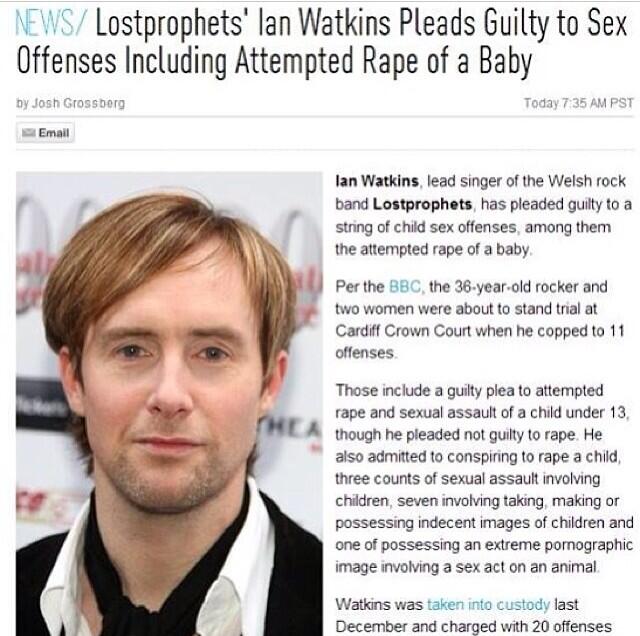
E News! had a real EEEK moment when they used a photo of the wrong 'Ian Watkins' in their article about the Welsh rock band Lostprophets and their lead singer's guilty plea. They actually used a photo of 'H' from Steps who is now taking legal action against the US website, who have been said to 'deeply regret' the mistake. It just goes to show that you need to be a bit more careful when using Google Images to identify someone unless you want another case of mistaken identity...(Nelson Mandela and Morgan Freeman?)


At the end of November news of the Fast & Furious film series actor Paul Walker and his friend Roger Rodas' untimely death in a car accident became one of the most talked about moments of the year on Twitter. Hundreds of thousands of fans, fellow actors and organisations took to the social networking site to express their grief and offer consolation. The tweet from Paul's management was one of the most responded to tweets from the entire year, with almost 400,000 RTs.


Beware what you post on your Facebook page, Big Brother is watching you....or they are trying to! In the summer Facebook published its Global Government Requests Report for the first 6 months of 2013 which showed that during this time period the U.S Government made the most requests for information on Facebook users, with 11-12K total requests on over 21K individual users & accounts. Apart from the U.S other top Governments requesting data were the UK, India, Germany, Italy and France. 


Another event of the summer was the introduction #Hashtags to Facebook - to the dismay of many users. A hashtag is a word superseded by a # - thus turning the word into a clickable link to all other posts using this hashtag. Originally used on Twitter, hashtags are now becoming globally used across multiple social networking sites like Pinterest, Instagram and Vine - and are being integrated into TV, film and print to create fully linked-up marketing campaigns. 


2013 was a busy year for Instagram - the photo sharing platform that makes our photos look so much cooler. In April the platform was bought by Facebook for $1bn and in June it launched its video sharing feature which lets users take 15 second videos & apply filters to them. This new feature appeared to rival Twitter's 'Vine' which saw a 40% drop in video shares in June. 

Introducing Video on Instagram from Instagram on Vimeo.


Cuppa Jo? Listen up caffeine lovers, in October Starbucks launched #TweetaCoffee - this allows you to gift a friend a $5 Starbucks gift card with just a tweet! Simply link up your account then tweet @Tweetacoffee to [your friends handle] and add personal message if you like - they are then sent a link to their e-giftcard! Nothing says I love you like a Caramel Macchiato, right? It'll be interesting to see how other retailers use this functionality in the year ahead.


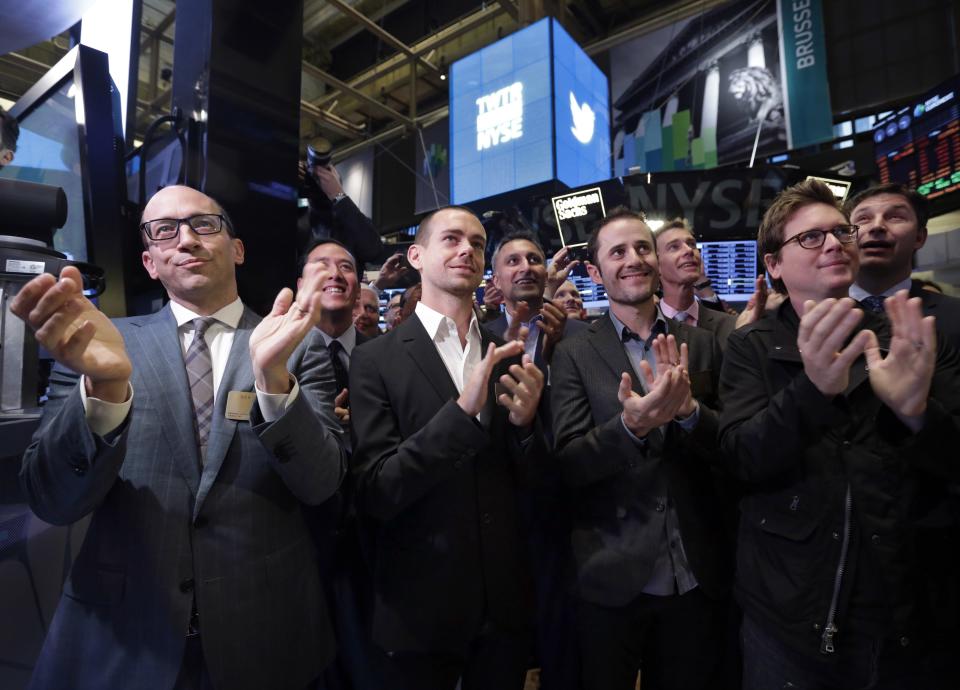
Kerching! On the 7th of November Twitter entered the Stock Market under the name of 'TWTR' with stocks selling at $45.10, or 73 percent above its $26 IPO price. This opening price valued Twitter at $31 Billion. 


Glee actress and singer Lea Michelle's tweet with a photo and her late boyfriend Cory Monteith was one the most retweeted post on Twitter in 2013 with fans showing their support through just under 400,000 RTs. 


On 15 April the Boston Marathon finish line was hit by two bombs in quick succession. Journalists and members of the public took to Twitter to spread news of the event, with the first tweet being sent seconds after the event happened. Talk of the tragedy continued to dominate Twitter throughout the week with keywords Boston, #bostonstrong, Boston Marathon and #prayforboston being used millions of times throughout the week. (Boston used around 6 million times on the 15th alone) The Boston Police Department even used Twitter to try and identify the suspects showing how live-tweeting and two way conversation through Twitter is shaping how the public find out about, and talk about events globally in real time. 


No, that's what Snapchat said to Facebook when they offered to buy the platform for 3 Billion in November. It's thought that Zuckerberg made the offer to try and engage with the younger users who are now shying away from Facebook (probably because their parents and great aunties keep commenting on every thing they do) and are now flocking to other platforms like Snapchat in their millions - 26 million in the U.S alone apparently. I think that although Snapchat is very popular right now, it may experience a decline due to the new Instagram Direct and the ability for users to share photos privately with their family and friends. 

Oreo's timely tweet at the Superbowl on February 3rd showed how explosive a reaction can be seen when brands create timely and relevant content. The post has received over 15 thousand retweets to date and should get other brands thinking about upcoming events relevant to their industry or audience and how they should be 'on the ball' and ready to create relevant content if anything interesting/unusual/funny happens (even just the lights going out!)


In June Facebook started to roll out the ability for users to comment on wall posts with Photos. This small piece of functionality goes a long way in allowing users to be more creative with their replies, and gives brands a whole new functionality for running competitions - like the Glasgow 2014 Commonwealth Games have done here to engage with users in a fun way and allow them to show their excitement for the Games. 


In 2013 the Queen's 'The British Monarchy' Facebook page reached over 1 million likes. 

The world also went mad for the #RoyalBaby - Prince George. From 7.37am on 22 July when +Clarence House confirmed the birth on Twitter a frenzy ensued which saw over 2 million mentions of the birth, and #RoyalBaby being used just under 1 million times by excited well wishers. Tweets peaked at 25,300 per minute at 8.37pm - no doubt during the evening news!

2013 saw the Oxford Dictionary take notice of Social Media with Selfie being named the 'Word of the Year'. A number of users took to Twitter and Instagram to share their #selfies during the day of the announcement, and a couple of brands got involved too like the Nando's cockerel and Clyde the mascot for the Commonwealth Games in Glasgow. 


After Typhoon Haiyan (Yolanda) hit the Phillipines in November a call for help went out, predominately through social media. Twitter was used to share information about the storm with over 6.1 million mentions of "Typhoon", “Philippines,” “Haiyan” and “Yolanda” from the 7th - 15th November. As people started talking about the disaster it became clear that most people wanted to help in some way. Celebrities such as Justin Beiber and Harry Styles urged their followers to donate to relief operations, around 5,000 people took #unselfies to share information about donating and Google's crisis map showed a crowdsourced view of evacuation centers, crisis areas, and relief drop zone areas.


U decide! For the first time ever in 2013 Twitter partnered with TIME to vote on the 'Person of the year' using #TIMEPOY. Whilst the final decision still lay with TIME editors, Twitter users could vote on who they thought most affected the news of our lives over the past year to help the editors make their choice. Miley Cyrus was leading the way until December 2nd, but was pipped to the post when Pope Francis was announced as the honoree. 

Twitter launched its innovative micro-video platform 'Vine' in January 2013 which allows users to share 6 second video clips with the addition of hashtags. Users can 'start and stop' filming by touching the screen allowing the production of stop-motion video, humorous comedy sketches and mini dramas! Vine was the most fourth most downloaded free app in the appstore in 2013 showing that the micro trend (Sending snapschats for seconds, 6 & 15 second video clips) is getting bigger, so to speak.


TWerk it! Miley Cyrus shocked the world with her performance at the MTV VMAs and it certainly got people talking: 306,000 of them per minute in fact! Tweets were mostly positive on Sunday night (#votemiley: 28K, sexy: 18K mentions) during the performance but come Monday morning things had turned a bit nasty.(bitch:20K, bad: 52K, hate: 40K metions) Is all publicity good publicity? Hmmm. 


In 2013 the #1 Top Trending video on YouTube was The Fox (What does the Fox say?) The video has over 317 million views.


On 19 June 2013 over 8 million people tuned into YouTube to watch Felix Baumgartner's supersonic freefall from 128K. This meant the Red Bull Stratos broke the record for the most concurrent liveview views ever!


There wasn't a Z-lister in sight at the 85th Annual Academy Awards held in L.A in February 2013. The #Oscars generated a record breaking 8.9 million tweets with 2.1 million coming in during the Red Carpet, and 6.8 million from the awards ceremony. The most talked about events during the night were 'Argo awarded Best Picture' (85,300 tweets per minute), 'Adele performing Skyfall' (82,300 tweets per minute) and not forgetting Jennifer Lawrence's dress! 


Thanks for reading! Here's to another exciting year for Social Media in 2014. 

If you liked this post, then please feel free to share it - 


2 August 2013

Great marketing ideas - Prince George and Hello Flo!

I've been a terrible blogger recently. We had a brief spell of gloriously nice weather in Scotland and I couldn't bring myself to pick up my laptop, let along sit and think about writing! My thoughts were more along the lines of 'How's my tan coming along', and 'ANOTHER BBQ?!' 

Don't panic - we've now resumed normality and Scotland is once again bathed in a blanket of cloud and drizzle. A such I've gave myself a kick up the bahookey and shall be getting back into writing once again. 

The idea behind this post is just to give you a look at a couple of great marketing ideas I've seen out and about recently. 

George's Royal Baby line

To celebrate the birth of little Prince George - George 'at Asda' cleverly produced a range of baby clothing. Some people are taking it too serious and claiming it's tacky, and hey - it is a little, but I also think it's a great example of 'going with the flow' and being reactive to major events. (like Oreo's 'you can still enjoy them in the dark' advert when the lights went out at the SuperBowl)


Hello Flo - The Camp Gyno video

For the life of me I can't remember how I discovered this video, but it's been created by American brand 'Hello Flo' which is a service delivering 'feminine products' to young girls. It's fantastically cringey at points and I think it's a memorable and light hearted way to get young girls talking about a sometimes embarrassing subject. 


Have you seen any great marketing ideas lately? Comment below! Thanks for reading! Melissa.

If you liked this post, then please feel free to share it -   


3 May 2013

15 things you should be doing to drive traffic to your blog!


I'm fairly new to the world of blogging, but even during my short stint writing blog posts for my creative blog: The Creative Frontier and my beauty blog: Beauty and the Bargain, I've discovered a few tricks of the trade that can help boost your page views dramatically. 

I'm certainly no expert and I'll admit I still haven't quite yet cracked how to get more followers via the 'Google friend connect' feature. If you've got any tips on this please feel free to 'share the wealth' and comment below! But as for now I'm happy just writing away to build my experience and hoping that it'll come in useful the next time I'm applying for a job!

Anyway, if you're writing a blog and want to help more people read it then here are some methods that I've been using recently...

1 Get social!
As well as linking to your blog on your Facebook and Twitter bios you should post links to all of your new blog posts on your personal channels. If you want to go one step further you could set up a 'fan page' for your blog on Facebook, and similarly a dedicated Twitter account. Depending on what you're writing about use popular hashtags to help get your content noticed, for example, beauty bloggers commonly use #bbloggers when linking to their posts. 

2 Contact influencers
Following on from the point above, you should try and get your blog posts noticed by 'influencers'. By this I mean that getting RT's, replies, shares or comments from influential people who are in some way connected to the theme or content of your blog. For example, if you're a beauty blogger and you write a review of a Revlon lipstick....@mention Revlon on twitter telling them about it and hopefully you'll get a RT to thousands of other fans who like Revlon. (good PR for them and exposure for you) 

3 Use Linkedin
If like me you're writing a blog to help boost your writing skills to improve your job prospects then it makes sense to encourage your Linkedin connections to view your blog. You can mention it within your actual personal profile and also post updates, much like a Facebook 'status'. Just recently you can @mention 'companies and connections', which would be useful if you had written a blog post about a certain company, person or if you just wanted to notify someone in particular about the post. 

4 Use Google+ features
As blogger.com is a Google platform it 'likes' it if you use Google features and other platforms, and I've certainly seen a rise in my page views since I've started using these techniques:
  • Automatically share your posts on your Google+ page (make sure they are set to share with the public)
  • @mention people or companies directly within blog posts
  • Enable 'Google+' comments on your blog posts
  • Search for and add other bloggers into your 'Circles' 
  • Join or even create relevant Google+ communities
  • Use the 'Google friend connect' feature to follow other bloggers and encourage others to follow you

5 Keep search engines 'in-the-know' 
Every time you post on your blog submit the link to http://pingomatic.com/ which is a free service that tells search engines that your site has been updated. 

6 Submit links to Reddit
One of the sites that drives the most traffic to my blog is http://en.reddit.com/. Create an account and sumbit a link to every new blog post you write, tagging in under the right group to make sure it gets noticed. Most of mine go under Graphic Design, Social Media or Marketing. 

7 Get Bloglovin followers 
This site is a tool for publishing your blog posts and following other blogs. It seems to be most popular with beauty and fashion blogs but it could still be worthwhile to create some more inbound links to your blog which will increase it's credibility to search engines. Once you've made an account you can add a badge to your blog sidebar to encourage people to follow you on Bloglovin. You can also link your profile with your personal Facebook page so it automatically posts your latests blogs. 

8 Use good photos and ALT tags
Be sure to include at least one image in all of your blog posts as not only will it help it look more interesting it will pull through as a preview when you link to the post and encourage potential readers to click through. Also, remember to include descriptive ALT tags for images for accessibility and to increase the chance of the image being found through a search engine. 

9 Choose the right 'labels' 
Remember to use labels to categorise your blog posts. They can be shown at the bottom of your posts and users can click through if they see a word, or label they are interested in . You can also use them in your sidebar as a menu by showing how many posts you have per label. 

10 Run a competition
From what I've seen a sure fire way to promote your blog is by running a competition on it through a service such as http://www.rafflecopter.com/. You can encourage people to enter through a number of methods such as following you on Twitter, sharing your blog link, liking you on Facebook etc...I think I might try it out soon on my beauty blog, but I'm not sure what I'd give away here on The Creative Frontier hmm!

11 Become (or invite) a guest blogger
A great way to drive traffic to your blog is to write a 'guest blog' on another persons blog where you can include a link back to your own blog. You could also check out your local publications, newspapers and websites to see if you could write an article for them which could also include a link to your blog (I did this recently with lanark.co.uk)

12 Pay to advertise on other blogs
If you've got some dough to spend you could pay to advertise on other popular blogs through the form of a button or graphic. I'm not sure if there is an official process for this as from what I've seen some bloggers simply post asking 'who wants to advertise on my blog' and presumably people get in touch and pay £x per month to have a graphic or link in their sidebar.

13 Comment on other blogs and leave your link
Blogging is all about building a network so it's essential to check out other blogs within your industry - not only will you be able to see what other people are doing you'll be able to pick up some useful tips! When leaving comments on other peoples blog posts be sure to make them meaningful, not just 'hey check out my blog [link]' - by all means leave a link to your blog but try to read the blog post properly and comment sincerely. 

14 Be relevant!
Blog posts are going to get picked up and noticed if you talk about something relevant. This might be to do with current affairs, new inventions/technology, new products (especially relevant in the beauty industry) or recent events. Of course the problem is that everyone might have this view and your post about the "new Facebook layout" might get lost within a barrage of other similar ones - that's why you've got to do something to put your own twist on it and get your own opinion across. 

15 Give your post a good title
Although you shouldn't judge a book by it's cover, many of us are probably guilty of judging a blog post by it's title! Try to include important keywords from your blog post in it's title as these will catch peoples eye when they see any links to the post. Human beings are naturally curious so it also helps to make post titles intriguing  to make people feel as if they are missing out if they don't read it. Some examples of title formats could be...

  • How to...
  • 4 ways to...
  • The top 10...
  • The best way...
  • The worst things about...
  • What you shouldn't be doing...


Thanks for reading, as I said I've just started blogging so am by no means an expert but I hope you found some of the tips useful! 

Please feel free to comment below...you can even leave your link ;)

Related Posts Plugin for WordPress, Blogger...